Programming is organizing content for viewers.
As a Programming leader, a shockingly common question I get is: what is programming? I even get it from other programmers. It encompasses everything we do in entertainment, but it also means a very specific set of functions and jobs.1 It's an extremely hard function to define because depending on the organization it can involve greenlight criteria, editorial calendars, content curation, content planning or strategy, lots of nebulous program management; the function sometimes reports into Product or Content. And many companies (who should) don't have this function at all.
This is a field guide for content programming. First, I'll tell you exactly what programming is. Then I'll explain some of the many ways it can be worked on (which is why there is so much confusion). We'll cover how it evolved, how it works inside modern streaming products, how it differs from marketing and product recommendations, and why it remains essential in media. Along the way we'll also look at the past, present and future of content programming.2
The simplest definition of programming
Programming is organizing content for viewers.3 That's it in the simplest, broadest definition. While I come at this mostly as a video programmer, this definition and the rest of this post could easily apply to radio, shopping, or live events.
Breaking it down a little more, programming answers a service's most important content-discovery questions:
- What should we show?
- Where should we show it?
- Who is it for?
- What context makes it appealing?
- What business outcome are we trying to drive?
- How do we know whether it worked?
Where programming came from
The old-school version of this job was to organize content into a linear schedule. What time should each program air? (Or, what program should we design to fit each time of day?) This was important because what viewers watched on TV was directly tied to different times of day. For instance, it was believed that middle-aged women were at home during the day, which led to programming soap operas and daytime talk shows at those times. Or we could program for the fact that kids are usually asleep at night, which is why edgier or adult comedy shows like SNL and late-night TV could exist there. In programming, this is called dayparting: organizing content for viewers purely based on the time of day.
If linear broadcast and cable EPGs were the "user interfaces" of the late 20th century, then apps and websites are the UI of today.
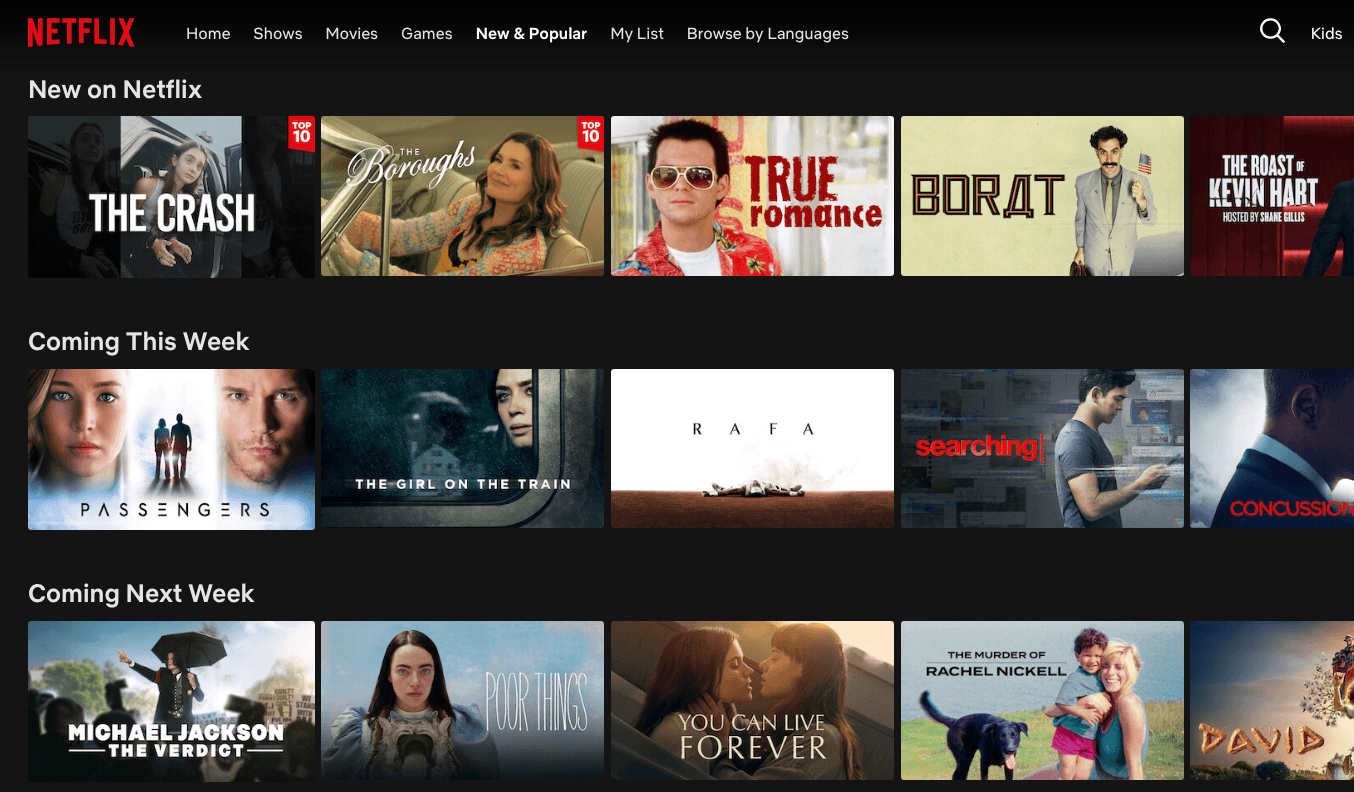
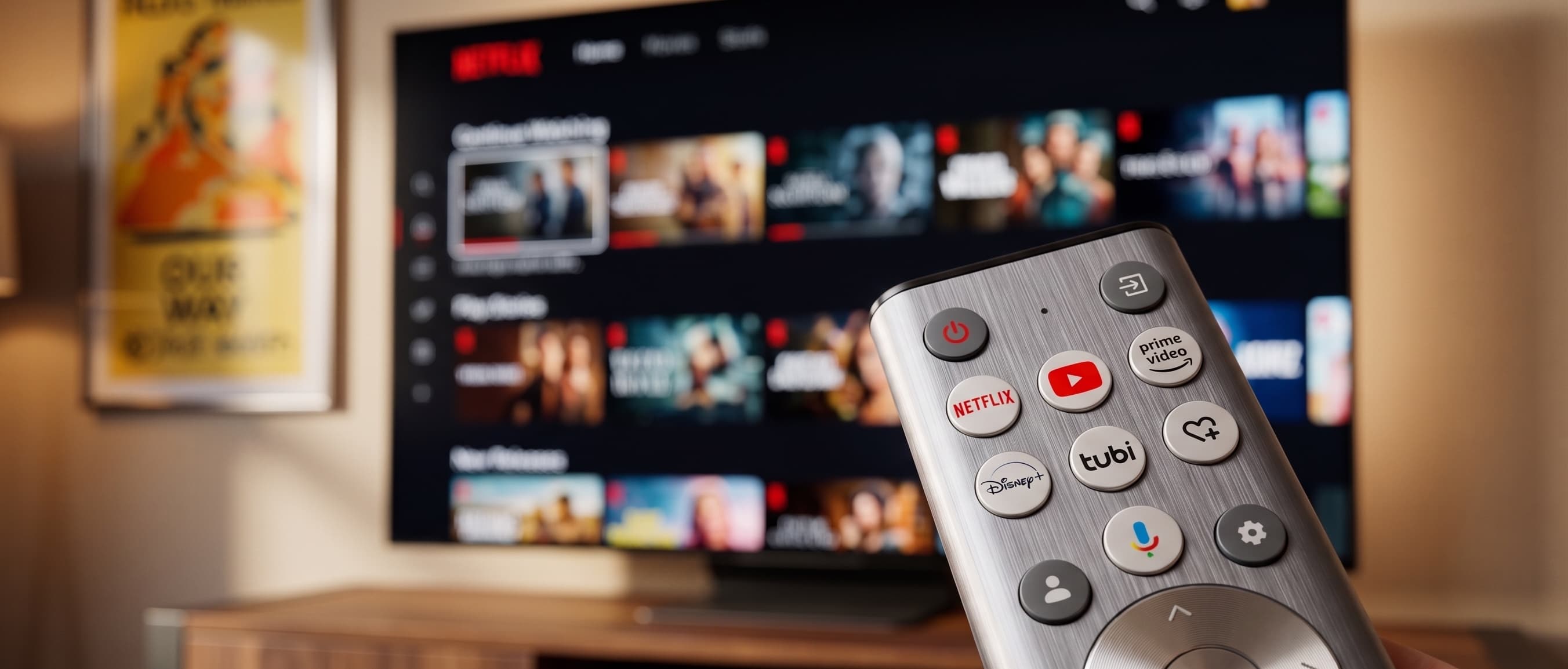
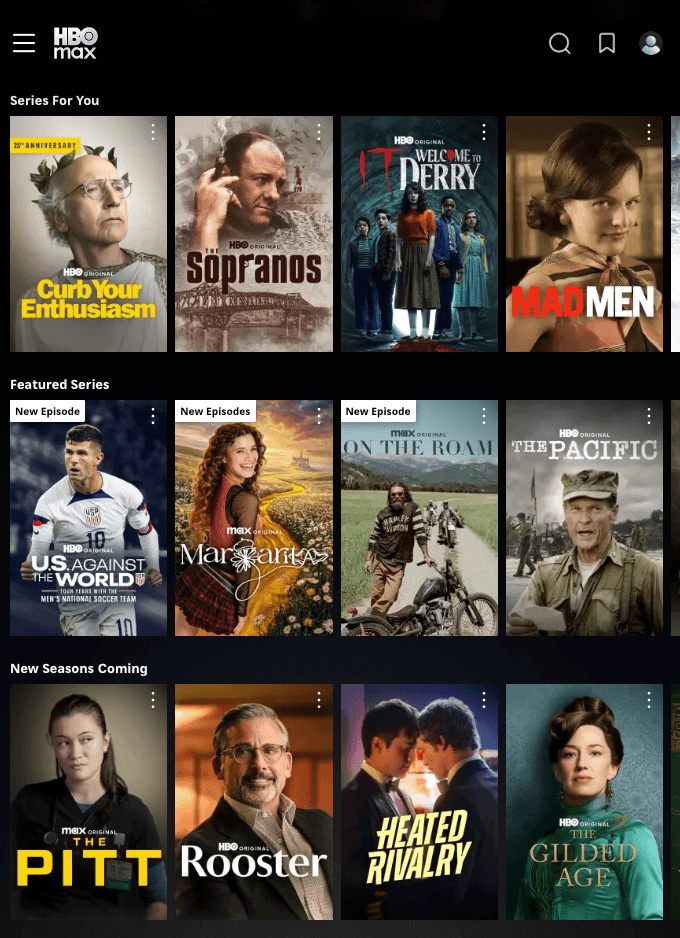
In modern apps and living room interfaces there's no time boundary — instead, it's about how a (mostly) personalized app serves up the right content to a viewer who's browsing. In streaming, the organizing interfaces are things like rows, shelves, carousels, notifications, tiles, trailers, landing pages, collections, and continue-watching screens. Layered into each of those programming surfaces — as they're sometimes called — is personalization. Personalization means that a form of AI or machine learning called a recommendation system is running a probability calculation to predict what you might like to watch (from a list of candidates filtered by other constraints).
If linear broadcast and cable EPGs were the "user interfaces" of the late 20th century, then apps and websites are the UI of today.
But don't let this fool you into thinking that programming is being automated away by personalization algorithms and AI. Later, when we look at common responsibilities, you'll see that modern programmers have a much more complicated and influential job because of the expansion of AI.
How a programming organization breaks down
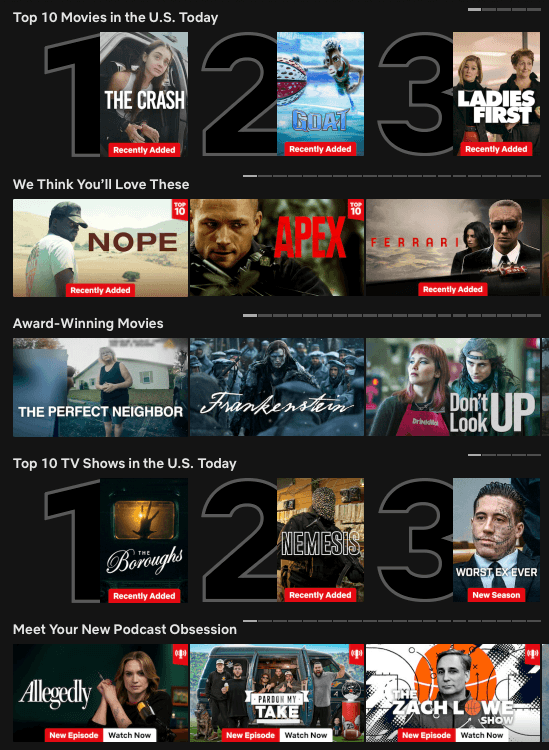
Why is programming so hard to define? When we break down the questions that stem from my definition, it's easy to see how programming itself can get fragmented into many different sub-organizations. My estimation is that more than 2,000 employees at Netflix work in a programming function.
Here, I've broken programming down into some of the most common organizations I've seen: content planning, editorial curation, merchandising, content strategy, and programming operations. It's not exhaustive, but it's a good place to start if you're building a programming organization.
Programming as content planning and scheduling
This is the most analogous to the old TV/radio meaning: deciding what "airs" at what time. That job has continued to exist in the streaming era, even when there aren't dayparts and streaming platforms no longer have fixed time slots. These roles work on when titles premiere, how they overlap (or don't), what tentpoles are important, and release patterns (binge vs. weekly vs. mid-season breaks).
Programming as editorial curation, labeling, and taxonomy
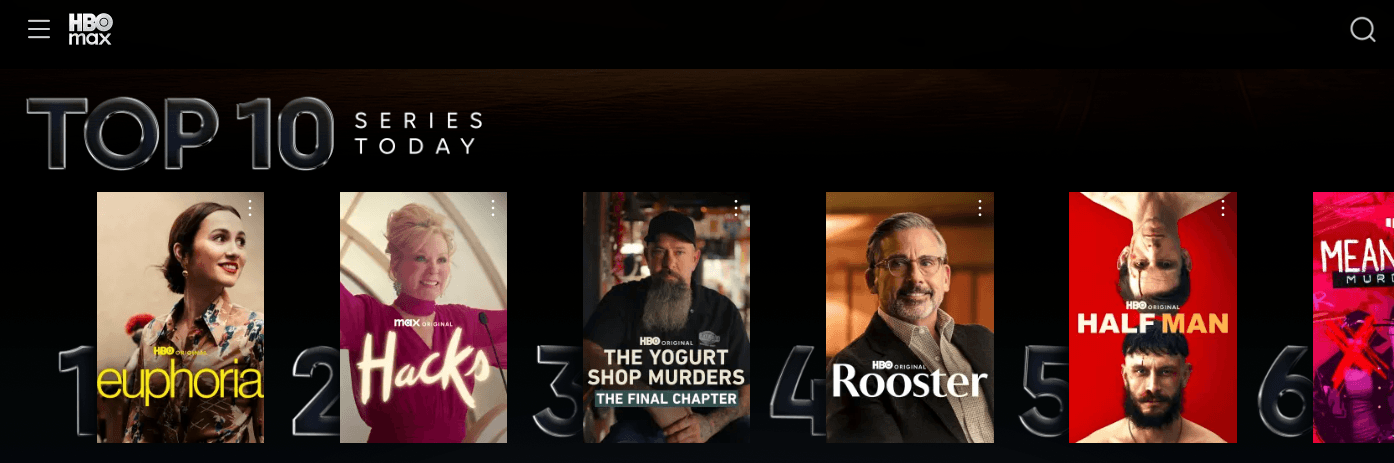
This is where teams bring a curatorial approach to which candidates are surfaced for recommendation and how titles are packaged, grouped, and described. Editorial curation can range from pure human curation (think: Apple Music or print newspapers) to human-in-the-loop workflows where human intervention only happens to shape an algorithm that's highly personalized (like Spotify's Discover Weekly). In many systems, a "collection" is the field of candidates that could go into a group, while rows, shelves, or playlists are the viewer-facing expressions of that group — sometimes personalized and sometimes fixed. Editorial curation may also package together franchises, genres, moods, or shoulder content.
Programming as merchandising
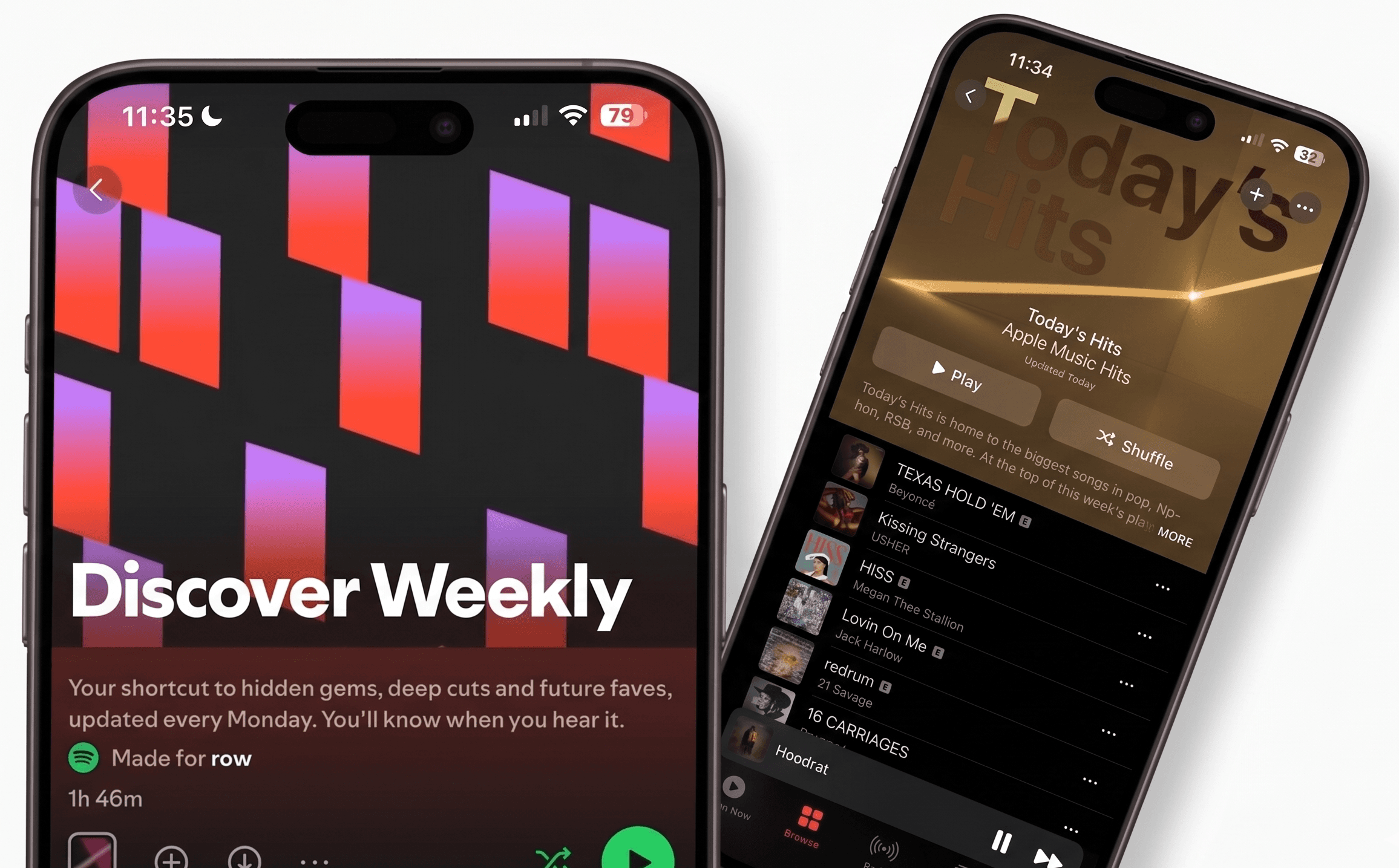
The mission in merchandising is making content appealing and legible. Merchandising of course comes from the idea of how products and labels look on store shelves — store shelves that are optimized to get you to buy. That's the same tenor for merchandising programmers, who control copy like titles and synopses along with imagery like thumbnails, poster frames, and increasingly video previews and trailers. All of those deliverables are packaging that influences content presentation and whether a viewer will think this is for me. I think of merchandising as the art of expectation setting for content: you want to intrigue people into watching something, giving each title its best shot at being seen; but if you over-sell or salaciously attract viewers, it can lead them to quickly abandon the program. Insiders often shorten merchandising to "merch" — as in, "let's check with the merch team."

Programming as content strategy
Content strategy takes a wider analysis of viewer demand and decides what the service should have more or less of. In the same way that "product strategy" decides what product you should build, content strategy looks at the ways content solves a viewer need — with the same considerations for competitive landscape, supplier cost and threatening alternatives. Content strategy can manage the portfolio of investments if content is being acquired or licensed; if not, content strategy can steer the portfolio of resourcing, discovery, and incentives on UGC or large-library (like TVOD) services. Content strategy can also control greenlight and renewal criteria.
Programming as programming operations
Programming Operations is the work of managing the systems, workflows and deployment processes that connect viewers with content. It can involve managing calendars, launches, placements, localization, metadata, experiments and implementing priorities. Typically, programming operations is scaling out implementation steps crafted by other teams. Metadata and content management is a huge area of focus for programming operations, because video data (titles, descriptions, genres, cast, keywords, ratings, advisories, air dates, country of origin, episode numbers) informs the machine learning and merchandising that influences audience choices.
This isn't everything. I've also heard of programming including functions like content engineering, product discovery, promotions, content understanding, content analytics,growth strategy, program activation, audience development and program management. The vocabulary shifts often. However you look at it, these are all ways of organizing content for viewers.
Content-market fit — the core job of programmers
Product-market fit is a milestone in product development, coined by Marc Andreessen, where a product proves it is in-demand for an audience. Before product-market fit (PMF), very few people use the product — either because it isn't good enough or because it hasn't found enough people who'd use it.
There are two directions you can work on this fit:
- You can work backwards from the content you have and look for viewers to match it.
- You can work backwards from the viewers you have and create, tweak, or curate the content to match them.
If we theoretically identified that we have access to a lot of boxing fans, we could license more boxing matches to please them. Or, if we already have a large library of amateur stand-up comedy, we could figure out ways of organizing it that draw in people who would like that.
At a given moment you could either work on the "content" or "market" side of the "fit." Realize that you can go very far down each direction depending on the strengths and weaknesses of your platform. Going very far down the market path could go beyond merchandising and curation into audience acquisition and marketing. Going very far down the content path could go beyond content strategy and content planning into altering titles themselves (creative development) or the experience around them (product). This is how programming groups start to look outrageously cross-functional — or similar to better-known functions like marketing and product.
I know I'm describing this like there are two sides of a scale to manipulate. But just like in PMF, it is never that straightforward. Tweak one side and it influences the other. You can't pick "either" path; the process requires deeply understanding both the viewers and the content.
Content platforms usually become weak at one or the other. Much more technical or product-focused companies tend to focus more on understanding viewers (probably because of the culture of PMF and Steve Blank). Much more content-driven streamers — especially the ones that used to be studios — tend to know their shows and movies a lot better and take for granted that viewers will want them. The challenge is bridging that gap: converting qualitative understanding of content into tangible insights and more quantitative data-driven viewer metrics into problem spaces for creatives and designers.
What good programming can do for a business
In my roles leading programming, I've seen programming move core business metrics:
- Driving new audience
- Increasing minutes watched or hours watched
- Reducing churn
- Increasing daily active viewers
Those metrics move because the product behaves better for viewers. From the perspecive of viewer outcomes or user stories:
- I can easily find something to watch.
- The service feels like a good deal (depth, relevance, diversity), even when I do not start playback immediately.
- There is something new every time I open the app.
- The service feels fair: I understand what I am getting and feel able to choose.
- I discover "diamonds in the rough" I would not have found otherwise.
That's what good programming feels like.
Failure modes of content programming
When done right, the programming hand is nearly invisible. When done wrong, it's very obvious. The most common failure modes I see lately are:
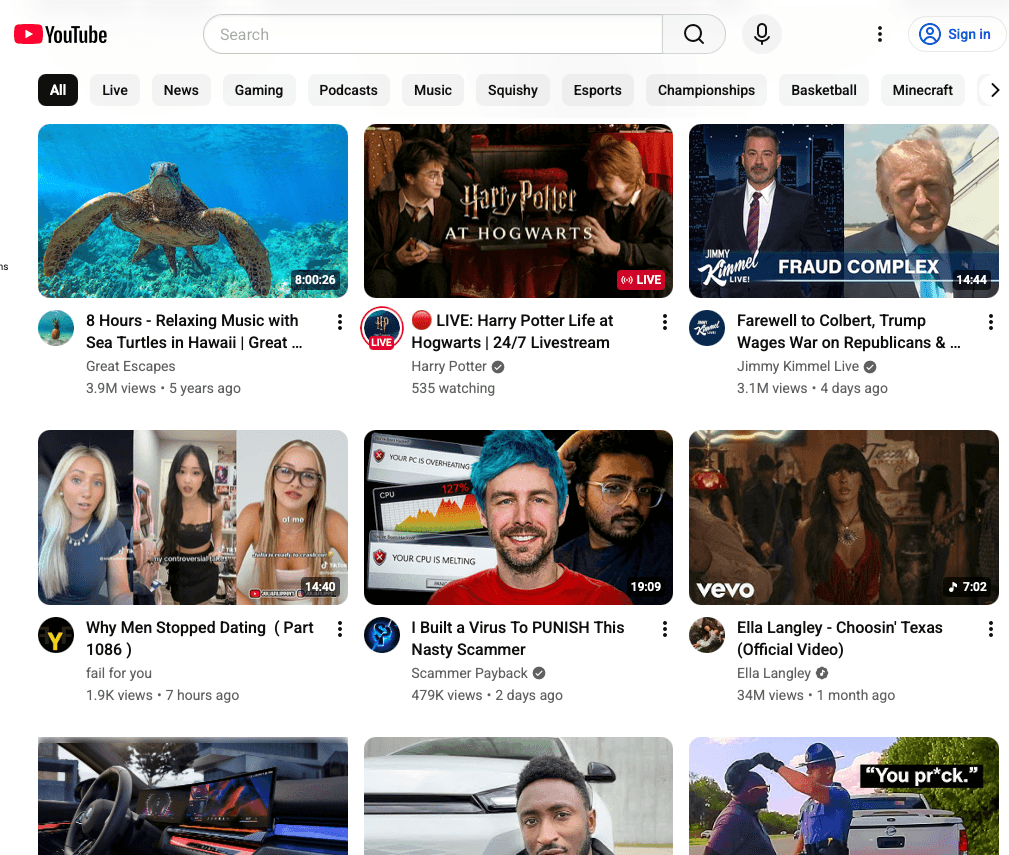
- Sameness. Every time I open the app, I see basically the same thing. Sometimes I even see literally the same thing, uploaded by a different person. Other times, it's the same general themes and I'm bored with them. This is usually an algorithm that optimizes for clicks, or one with feedback loop mechanics where old or irrelevant data is deeply ingrained. Another version of sameness happens on niche services where lots of the content is naturally similar (anime, horror, sports, fitness). Merch or curation can play a better role of differentiating titles in those experiences.
- The service is an assault on my senses. Every piece of content is desperately begging for my attention like the cover of a tabloid magazine. This is obviously a problem on UGC services because merchandising is largely left up to creators. But it can also be a problem on premium services that rely on ML-generated auto-play or merch playbooks optimized for attention-grabbing.
- Internal politics have become the homepage. This app looks more like a company org chart than a streaming service. The most prevalent version is when the needs of a content team trump personalization and the new shiny object is deliberately placed at the top of all homepages using "pinning." (Your viewer is thinking: why do you think I like WWE or Paw Patrol all of a sudden?) Another version is an app organized around "brands" or "franchises" (like acquisitions or old cable networks) that have internal importance but don't really matter to viewers. When companies "ship the org" like this, viewers think the service is random or irrelevant.
The future of programming
AI has been part of programming since it moved out of cable and video-store aisles; we've just been calling it machine learning instead. Personalization has always been improving, and most tech-friendly programmers have seen this cycle repeat: there is always a gap between the ideal viewer experience and what current technology can deliver. Several of my failure states above demonstrate this.
The fundamental issue with AI is that it's only as good as the data it's trained on. ML has a tendency to get so good that it overfits. It optimizes for the world it already knows. So when the landscape shifts — content changes, competitive landscape evolves, audience ages, business rules update — it keeps exploiting old signal. You get left in the dust without human intervention, because we're entering unknown territory.
What gets me more excited than filling machine-learning gaps is improving the impact of AI on the other disciplines of programming. Content understanding can get augmented. Content plans can get optimized and deeper. A wider stack of merchandising creative can get A/B tested and personalized.
We're in the post-Streaming Wars era, where even the smallest streamers have thousands of titles and endless UGC videos are gobbling up market share. Meanwhile, product features are becoming easier to copy, especially as AI-assisted development lowers the cost of building familiar interfaces. The platforms that will win will be the ones who best coordinate that abundance into content-market fit.
Appendix: The skills of content programming
Not every programming role requires every skill. A programmer working on global franchise launches at Disney+ may have a very different day-to-day job than someone programming YouTube Kids, managing a FAST channel, building editorial rows for a streaming homepage, or modeling a global release slate at Netflix.
Since 2019, I've been collecting programming job descriptions for roles ranging from the most senior to nearly entry-level in order to better understand the field of responsibilities and expectations held by companies. One day, I'll post a much deeper dive in this appendix. For now, here's a snapshot.
The 11 most important skills in programming.
With a thorough deconstruction of dozens of job descriptions, I distilled the industry's top 11 most-in-demand skills for programmers. I chose to share 11 because each of these skills appeared in over 90% of job descriptions and that level of presence indicates they are essential for success.
- Stakeholder management, alignment and influence
- Content strategy and portfolio vision
- Customer/member advocacy and empathy
- Data-informed decision-making using quantitative and qualitative evidence
- KPI definition, performance measurement and reporting
- Operating in ambiguity, change and zero-to-one environments
- Program/project management and cross-functional execution
- Streaming, OTT and digital-media ecosystem knowledge
- Executive communication, presentations and narrative synthesis
- Scalable workflows, process design and operational rigor
- Product, engineering and design partnership
Notice just how diverse the higher-order skills are. They cross analytics, operations, collaboration, execution and technology.
The top skill, "Stakeholder management, alignment and influence," literally appears in every single job description I've reviewed.
Footnotes
-
It's like when people ask: what is strategy? I get this uh-oh feeling of overwhelm with that one. There's always that one consultant or author who everyone says has the best definition. Sure, there are really good definitions of strategy. But it's sort of everything we do in business management… while also being a very specific department and role. ↩
-
This is where I'll stop saying "content programming" and just say "programming." I often say "content" before programming to distinguish this from computer programming… although most people don't call themselves "computer programmers" anymore. ↩
-
Sometimes in a corporate context, I also say "programming is connecting content with viewers" because it can seem a little more dynamic or "driven." But "organizing" is really more precise, and it's the real work of programming as a job. ↩